
Load-bearing framing and structural expansion services in Charlestown, New Hampshire.
When you are adding a second story, opening up a load-bearing wall, or building an addition that ties into your existing structure, the framing work has to account for how weight transfers through the house. T2B Carpentry, LLC handles structural framing projects in Charlestown where precision, material sizing, and code compliance directly affect safety and long-term performance.
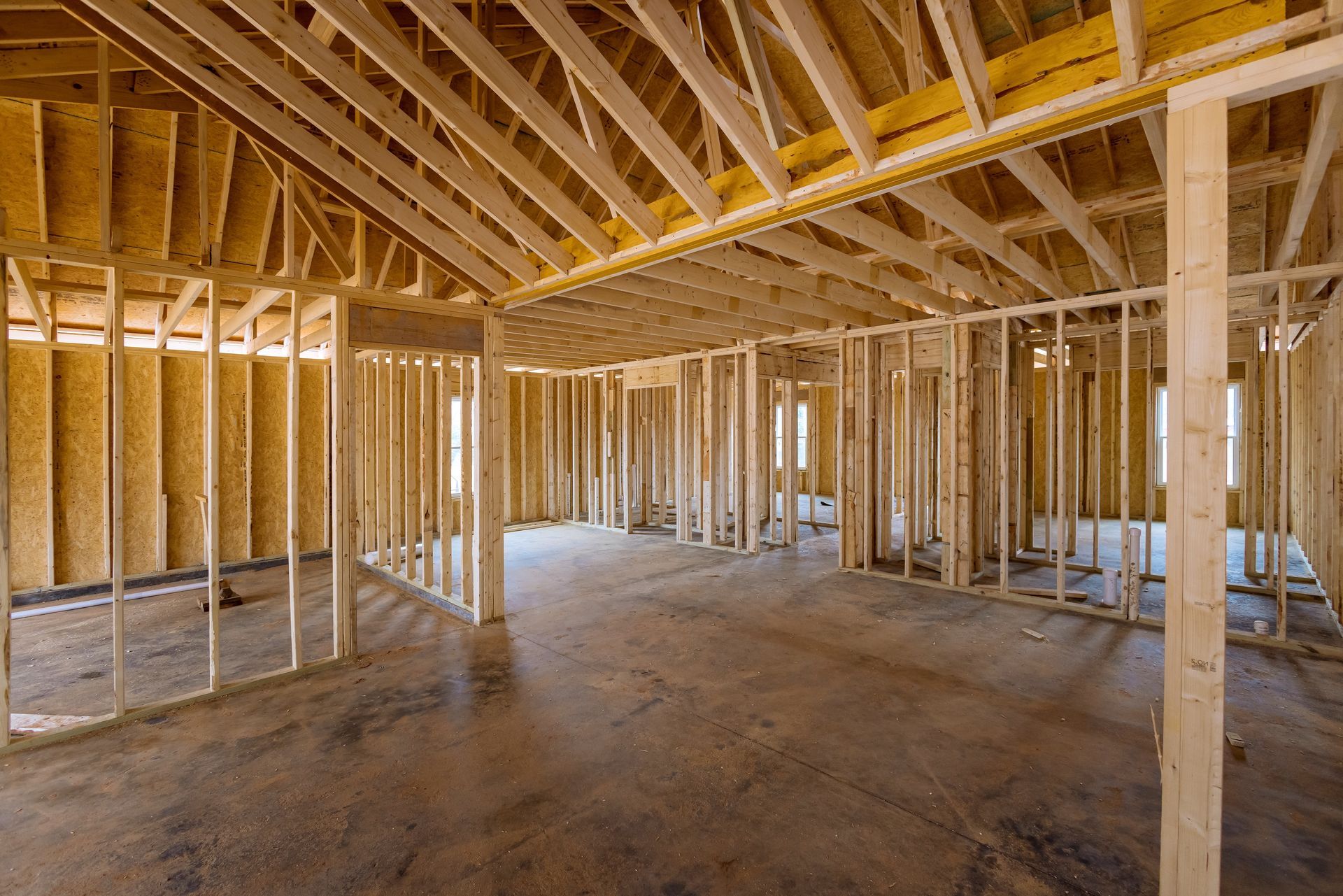
Structural framing involves building or modifying the skeleton of a home using engineered lumber, beams, and joists that are sized to carry specific loads. This includes installing headers over new openings, sistering floor joists to increase span capacity, and framing walls that support upper floors or roof systems. Every piece is measured, cut, and fastened according to local building codes and the structural requirements of your project.
If you are planning a major addition or structural change in Charlestown, contact T2B Carpentry, LLC to review your plans and confirm what is structurally required.
Framing That Holds Up Under Load
How Load-Bearing Work Gets Done Right
Before any wall is opened or beam is installed, the existing structure is assessed to determine where loads are currently supported and how they will transfer after the change. In Charlstown, this often involves working with older homes where floor joists, studs, and rafters were sized differently than they are today. Temporary supports are installed to carry the load while the new framing is built and secured.
Once the new framing is in place, you will notice that floors feel solid underfoot, walls are plumb, and door frames do not shift or stick. The structure is built to handle the weight it carries without sagging, cracking, or requiring future reinforcement.
Structural framing is inspected at multiple stages to confirm that beams, joists, and connections meet code before walls are closed up. This work is not reversible once drywall and finishes go in, so it has to be done correctly the first time.
What makes a wall load-bearing?
A load-bearing wall supports the weight of the structure above it, such as a second floor, roof, or ceiling joists. Removing or altering one requires installing a beam or header to carry that load across the new opening.
How do you know what size beam to use?
Beam size is determined by the span it needs to cover, the load it will carry, and the type of lumber or engineered material being used. T2B Carpentry, LLC calculates this based on building code tables and the specific conditions of your project in Charlestown.
Why does structural framing take longer than other carpentry?
Structural work requires temporary supports, precise measurements, code inspections, and coordination with other trades. Each step has to be completed and verified before the next one can begin.
What happens if the existing framing is not up to code?
If old framing does not meet current standards, it may need to be reinforced or replaced as part of the project. You will be informed of any required upgrades before work begins so there are no surprises during inspection.
What can go wrong if framing is done incorrectly?
Undersized beams can sag, improperly fastened joists can bounce or squeak, and walls that are not plumb can cause doors and windows to bind. Structural issues are expensive to fix once the home is finished, which is why inspection and precision matter.
If you are planning a second-story addition, garage conversion, or any project that involves changing how your home carries weight, reach out to T2B Carpentry, LLC in Charlestown to review your plans and confirm what structural work is required.
Common Concerns About Structural Work
Homeowners in Charlestown who are planning additions or major remodels often ask about how framing decisions affect cost, timeline, and what can or cannot be changed once the structure is built. These are some of the most common questions that come up during planning.